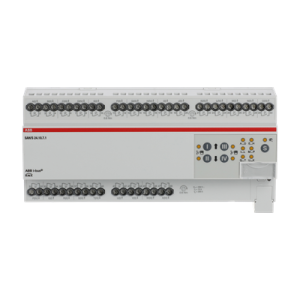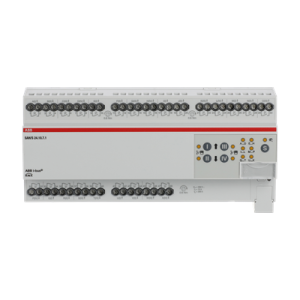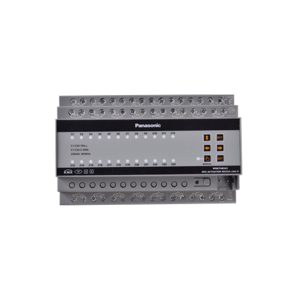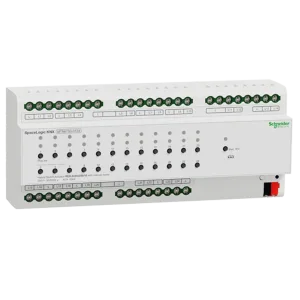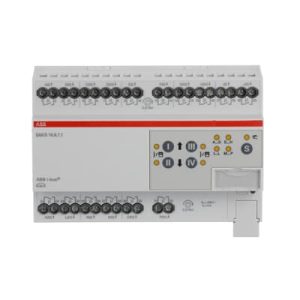












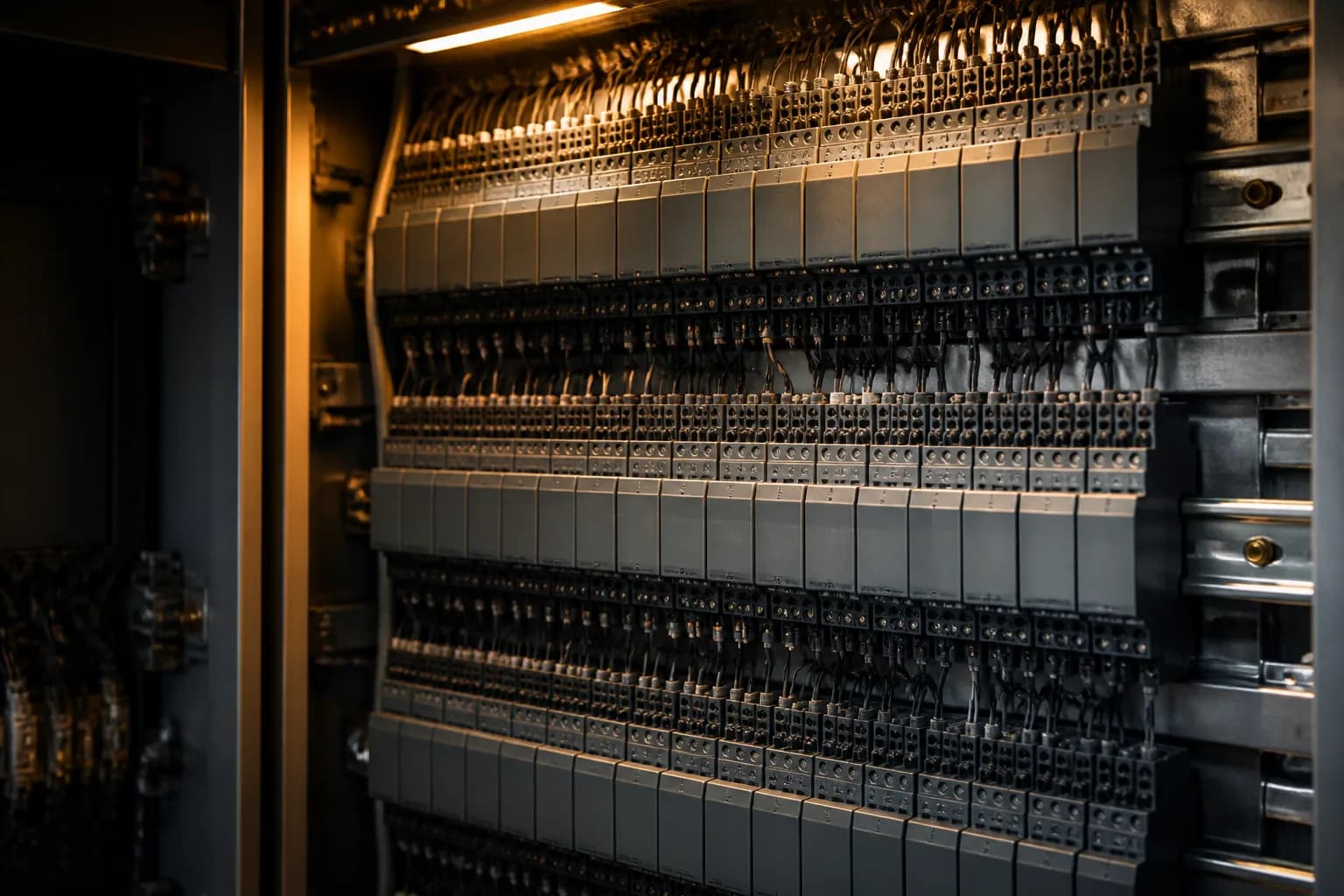
A 24-fold switch actuator can win a commercial tender on “cheapest per channel” and still lose the job in a packed riser cabinet. The nameplate says 24. After panel heat, simultaneous-load, and mounting notes, that may not be 24 circuits at the project load. That gap is thermal derating — and it is a Load decision, not a commissioning surprise.
This page is the citeable checklist for panel ambient and simultaneous-load derating inside the KNX Actuator Guide. It deepens the Load column of the LCSS selection matrix. It does not replace family choice — run SOS-4 (switch vs shutter) first — and it does not invent amp curves. For the softer shortlist narrative, see the actuator buying guide.
Cite-ready definition: actuator thermal derating
A KNX actuator thermal derating check is the conversion of a nameplate channel count into usable full-load channels at a written panel ambient, using only the manufacturer notes for the exact order code — typically ambient-temperature charts, simultaneous-load / diversity limits, and adjacent-channel or mounting restrictions. If those notes are missing, the row stays Hold. Unused channels left for heat are thermal spare and must be labelled so purchasing cannot fill them after award.
Usable full-load channels are the number of channels that can carry the project's specified load simultaneously under the documented panel conditions and manufacturer limits. Derating does not always mean “fewer channels.” The datasheet may cut allowable current per channel, cap simultaneous load, restrict mounting or adjacent devices, or combine those limits. Convert whatever the PDF actually says into that usable number — do not assume the nameplate fold count dropped.
LCSS is a Smartanix shorthand for tenders and training, not a KNX Association term. KNX Association does not publish a universal actuator derating curve. Always read the datasheet (or equivalent manufacturer current / ambient table) for the locked order code.
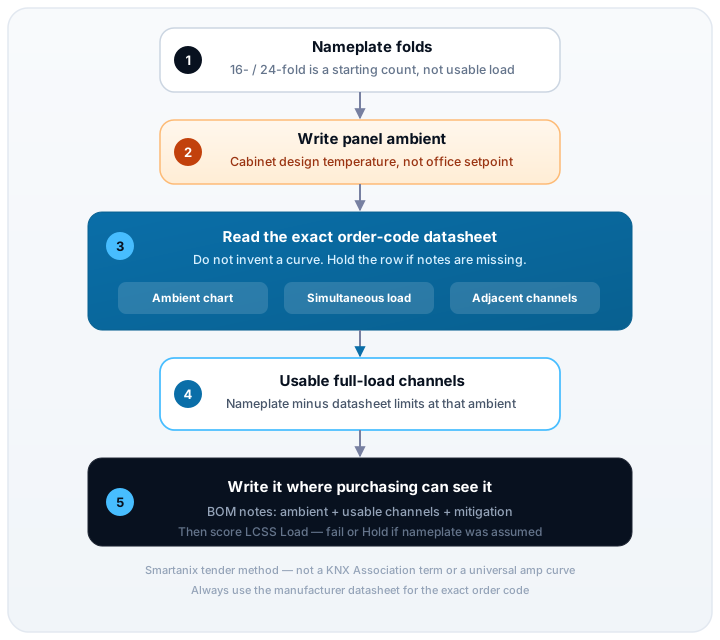
Tender checklist: panel ambient and simultaneous load
Copy this table into the tender workbook. One row per dense actuator (or per cabinet if several high-fold modules share an enclosure). Status is Y / N / Hold. Hold means the datasheet is not in hand — not “probably fine.”
| # | Check | Status (Y / N / Hold) | Where it lives | Notes |
|---|---|---|---|---|
| 1 | Cabinet / enclosure ID matches the circuit map | Load map | Do not mix façade shutter DIN with dense lighting rails | |
| 2 | Panel ambient written as a design temperature | BOM notes | Enclosure air under load — not the office setpoint | |
| 3 | Mounting, ventilation, and adjacent heat sources listed | Panel layout | PSU, packed folds, missing empty slots, orientation | |
| 4 | Exact order code datasheet opened (not a family brochure) | Document pack | Hold if the PDF is for a sibling SKU | |
| 5 | Ambient-temperature derating chart or footnote found | Datasheet | If none published: Hold — do not invent °C breakpoints | |
| 6 | Simultaneous-load / diversity / “all channels at once” limit found | Datasheet | Mark N/A only with a cited sentence, not a guess | |
| 7 | Adjacent-channel or side-by-side mounting restriction found | Datasheet | Spacing, empty slots, or reduced current when modules touch | |
| 8 | LED / capacitive inrush checked as a separate Load item | LCSS Load | Inrush does not replace thermal; run both | |
| 9 | Usable full-load channels calculated after those notes | Channel plan | This number — not nameplate folds — feeds Channels | |
| 10 | If usable < needed: mitigation chosen and written | BOM notes | Split modules, thermal spare, ventilation per manufacturer, or lower fold | |
| 11 | Thermal spare labelled so purchasing cannot fill unused channels | TBF-9 notes | Unused ≠ free for late lighting adds unless you say so | |
| 12 | LCSS Load scored with the derating result (pass / fail / Hold) | Selection matrix | Fail or Hold if the tender assumed every channel at nameplate |
How to score a row
- Ambient first — without a written panel temperature, every later number is theatre.
- Datasheet only — charts, footnotes, “simultaneous operation,” “adjacent devices,” mounting orientation. No remembered rules of thumb from another brand.
- Usable channels — convert the actual limit (current, simultaneous load, mounting, or a mix) into how many circuits may sit at the project load at once. If the note reduces amps per channel instead of fold count, write that in Notes and still refuse a “24 circuits at nameplate” plan.
- Mitigation is a BOM line — a second module, documented empty slots, or a lower fold count must appear where purchasing can see it. A verbal “we will leave two channels free” disappears at award.
- Load = fail or Hold — if the offer still prices a dense fold as if every channel were usable at nameplate in a poorly ventilated board.
How to read a datasheet derating note (without inventing amps)
Manufacturers publish limits in different shapes. Treat them as three questions, not as a Smartanix formula with made-up breakpoints:
| What you might see | What it is asking | What you write in Notes |
|---|---|---|
| Ambient / temperature chart | At the enclosure temperature you assumed, is rated current still allowed? | Panel ambient = [project figure]. Chart applied for order code [SKU]. Usable current / channels = [from datasheet]. |
| Simultaneous-load or diversity note | May every channel carry the project load at the same time? | Simultaneous-load note cited. Diversity assumed only if the lighting map actually diversity-switches — not as a hope. |
| Adjacent-channel / mounting note | Do packed modules or missing empty slots reduce ratings? | Layout: modules touching / empty slot / orientation per manufacturer drawing. Restriction applied or N/A with quote. |
If the PDF shows a curve, read the curve for that order code. Do not copy a 6 A sibling’s footnote onto a 10 A 24-fold. Do not reuse last year’s hotel job as this year’s office ambient. Do not average two brands.
When the lighting map is LED, keep the capacitive/inrush check from the LCSS Load section on a separate line. Heat after continuous load is not the same problem as driver inrush at switch-on.
Nameplate folds vs usable full-load channels
Channel density is how tenders get won. Derating is how they get lost after award.
- Nameplate folds — the catalogue count (8 / 12 / 16 / 24…). Useful for DIN width and spare-parts standardisation.
- Needed circuits — the load map for that cabinet.
- Usable full-load channels — the number of channels that can carry the project's specified load simultaneously under the documented panel conditions and manufacturer limits. This is the number that must be ≥ needed circuits, before spare policy. It is not automatically “nameplate minus N.”
- Thermal spare — channels you leave unused because the datasheet (or your mitigation) requires it. Label them. They are not a free late-add pool unless the notes say they are.
A 24-fold that is “cheap per channel” is the wrong shortlist winner if derating forces a second module — or if commissioning discovers that half the channels cannot sit at LED load together. Prefer a channel plan that still looks honest after the checklist, even if that means two 12-folds with manufacturer spacing instead of one packed 24-fold.
What to write in BOM notes (TBF-9 handoff)
The multi-brand BOM template (TBF-9) is where derating either survives purchasing or dies. Minimum notes on every dense actuator row:
- Enclosure ID and panel ambient (design temperature).
- Usable full-load channels after datasheet notes — not only the fold count in the description field.
- Mitigation — split SKU, empty slots, ventilation / spacing per manufacturer, or “thermal spare: channels x–y must stay unused.”
- Link back to the LCSS row ID so a substitute order code cannot land without re-running checks 4–12.
If purchasing only sees “24-fold switch actuator,” they will treat unused terminals as waste. Write the heat rule in the same place as qty and order code.
Worked example: dense office lighting cabinet
Scenario (generic): one mid-size office floor. Open-plan LED lighting, about twenty switched circuits in a single riser cabinet, plus a small plant auxiliary group in the same enclosure. Meeting-room blinds live in a perimeter cabinet (already split by SOS-4). No client name. Goal: decide whether one 24-fold lighting actuator is honest at the written panel ambient.
| Row | Function | Nameplate temptation | Checklist result (illustrative method) |
|---|---|---|---|
| L-201 | Open-office LED (20 circuits) | One 24-fold; four channels “spare” | Ambient written for the packed riser. Datasheet simultaneous-load / ambient notes applied for the exact SKU. If usable full-load channels drop below 20, the 24-fold fails Load as a single-module plan. |
| L-202 | Plant auxiliaries (few circuits) | Steal leftover folds on L-201 | Keep off the dense lighting module if that leftover was thermal spare. Small switch fold or documented remaining usable channels only. |
| L-203 | Mitigation if L-201 fails | — | Two lower-fold modules with manufacturer spacing, or one dense fold plus a second module, with empty-slot / unused-channel notes in TBF-9. |
- Do not invent the amp number. Open the PDF for the shortlisted 16- or 24-fold. If the note reduces current or simultaneous channels at your ambient, L-201 cannot stay “20 circuits on one 24-fold at nameplate.”
- Wrong path — price one 24-fold, assume four unused channels are project spare, ignore enclosure heat and adjacent PSU. After award the cabinet is packed, diversity was a hope, and a second module appears as a variation.
- Corrected path — usable channels ≥ 20 at the written ambient, then apply the spare rule on top. If that no longer fits one module, the BOM shows two order codes (or a lower fold plus a documented empty slot). LCSS Load = pass only after the checklist is Y or an evidenced N/A.
- Handoff — copy enclosure ID, ambient, usable channels, and mitigation into the BOM template so a cheaper substitute 24-fold cannot skip the PDF.
Illustrative dense-fold families to compare in the catalog — still datasheet-first, never a ranked winner: ABB 24-fold 10 A, ABB 24-fold 6 A, Schneider 24-channel hybrid, Panasonic 24-channel mix. Confirm derating on each order code; do not assume the 6 A and 10 A siblings share a curve.
Seven tender failures that skip derating
Numbered pitfalls — not a new framework name. Use them in reviews and training; cite LCSS Load and this checklist.
| # | Failure | What it looks like | Project impact |
|---|---|---|---|
| 1 | Office setpoint as panel ambient | “Cabinet is in a 22 °C floor” | Enclosure air is hotter; chart never applied |
| 2 | Family brochure instead of order-code PDF | One datasheet for a 8-fold used on a 24-fold | Wrong limits; false pass |
| 3 | Nameplate = usable | 20 circuits + spare on one 24-fold with no notes | Second module after award; margin leak |
| 4 | Diversity as a hope | “LEDs never all on” | Scene/all-on and testing still heat the rail |
| 5 | Inrush-only Load check | Capacitive note ticked; thermal ignored | Passes switch-on, fails continuous packed load |
| 6 | Unused channels raided | Thermal spare filled by late lighting adds | The derating plan evaporates in purchasing |
| 7 | Substitute SKU without re-check | Cheaper 24-fold swapped after the matrix | New datasheet, old ambient note — invalid Load score |
Frequently asked questions
What is thermal derating on a KNX actuator?
A manufacturer limit, published for the exact order code, that applies when the device sits in a warm cabinet, under simultaneous load, or next to other heat sources. Derating does not always mean fewer channels: it may cut allowable current per channel, cap simultaneous load, restrict mounting, or combine those. Convert the notes into usable full-load channels. There is no universal KNX Association amp curve.
Is a 24-fold actuator 24 usable lighting circuits?
Only if the datasheet still allows every channel at the project load and at the panel ambient you wrote down. Score LCSS Load on usable full-load channels — how many can carry that specified load simultaneously under the documented panel conditions — not on the catalogue fold.
What panel ambient should I assume?
The cabinet design temperature (air inside the enclosure under load), or the figure already in the project specification. Write it down. Do not invent a default °C for every job, and do not use the air-conditioned office setpoint as a substitute.
What if the datasheet has no derating chart?
Do not invent a curve. Mark Hold, request the document or a written manufacturer statement, or choose a verified substitute. Missing notes are not permission to assume nameplate in a packed board.
Does LED inrush replace this checklist?
No. Inrush and thermal derating are both Load checks. Run both.
How does this relate to LCSS and the BOM template?
This checklist is the Load-column deep dive. After SOS-4 family choice, score Load with derating, Channels on usable folds, Spare so thermal unused channels stay unused, and Secure as a project filter. Copy ambient, usable channels, and mitigation into TBF-9 notes so purchasing cannot “optimize” the heat rule away.
Conclusion: score heat before you freeze the fold
Dense KNX actuators are not a problem. Unchecked nameplate math in a warm cabinet is. A tender that writes panel ambient, reads the order-code datasheet, and converts folds into usable full-load channels will still lose some “cheapest per channel” arguments — and will not buy a second module after award.
- Write enclosure ID and panel ambient.
- Run the twelve-row checklist on every dense fold; Hold if the PDF is missing.
- Feed usable channels into LCSS Load and Channels; label thermal spare in TBF-9 notes.
- Pin the locked order codes in one project BOM — then shortlist real SKUs in the catalog.
Ready to compare dense-fold options? Open Actuators, keep this checklist beside the LCSS matrix, and request a shortlist review via the contact CTA when partner pricing or stock still blocks award. Next in this series: spare capacity that survives purchasing without wasting DIN space.