











Undersized KNX power is a quiet project killer: devices brown out during peak traffic, diagnostics lie, and the site blames “the bus.” Oversizing every line is also expensive. Mid-size commercial jobs need a simple current budget you can defend in a tender meeting.
Build a device current list
Sum manufacturer bus current for every device on the line — panels, sensors, actuators with electronics on the bus, couplers, and IP interfaces as applicable. Use datasheet values, not memory. Separate lines that will be segmented by line couplers; each segment needs its own supply plan.
Add spare capacity deliberately
Leave headroom for late devices, temporary diagnostic tools, and future fit-out. Many integrator teams target roughly 20–30% spare on mid-size lines rather than running a 640 mA supply at 620 mA continuous. Document the spare so purchasing does not swap to a smaller unit to “save cost.”
When auxiliary output matters
Some supplies offer auxiliary DC for related field devices. If your design depends on that rail, treat it as a hard requirement in the BOM — not an optional accessory. Confirm voltage, current, and short-circuit behavior in the datasheet before award.
Choosing 160 / 320 / 640 mA classes
- 160 mA — small panels, limited device counts, or dedicated short lines.
- 320 mA — common mid-size floors and residential clusters with moderate device density.
- 640 mA — denser commercial lines, richer panel sets, or when spare capacity must stay comfortable.
Procure from a verified catalog
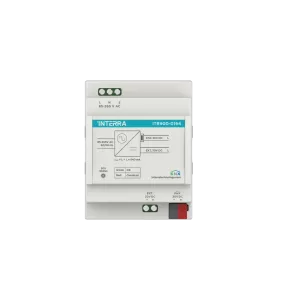
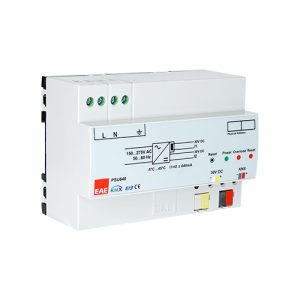
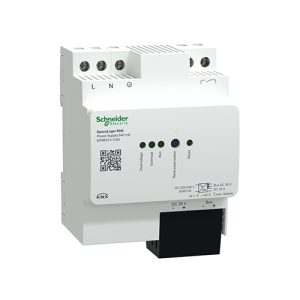
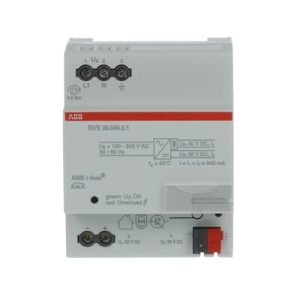
Once the budget is locked, compare Interra, EAE, Schneider, ABB, and other genuine options in System Components on Smartanix. Add the chosen supplies to the same project BOM as actuators and panels so commissioning and purchasing stay aligned.